What Are the Top Types of Stainless Steel Sheet Metal?
Choosing stainless steel sheet metal starts with the job, not the label. Will the sheet face salt spray, food acids, heat, or frequent cleaning? Grade, thickness, finish, and forming method all affect its performance. A bright surface may look ready for a kitchen wall, yet appearance alone cannot predict corrosion resistance.
John C. Lippold, a welding-metallurgy specialist whose work covers stainless steels, offers a useful principle: match material selection to service conditions. That is a paraphrase, not a direct quotation. It matters because “stainless” does not mean stain-proof. Even a suitable grade can disappoint when exposed to harsh chemicals, trapped moisture, or poor maintenance.
This guide compares common sheet choices, including 304, 316, 430, 409, and duplex stainless steel. It explains their typical strengths, limitations, finishes, and applications, from appliance panels to marine equipment. Some distinctions are not neat. Fabrication, surface treatment, and local exposure can change the outcome as much as the grade itself. A quick comparison helps narrow the options, but demanding projects still deserve review by a qualified materials or fabrication professional. We’ll look at what each type does well—and where it may fall short.
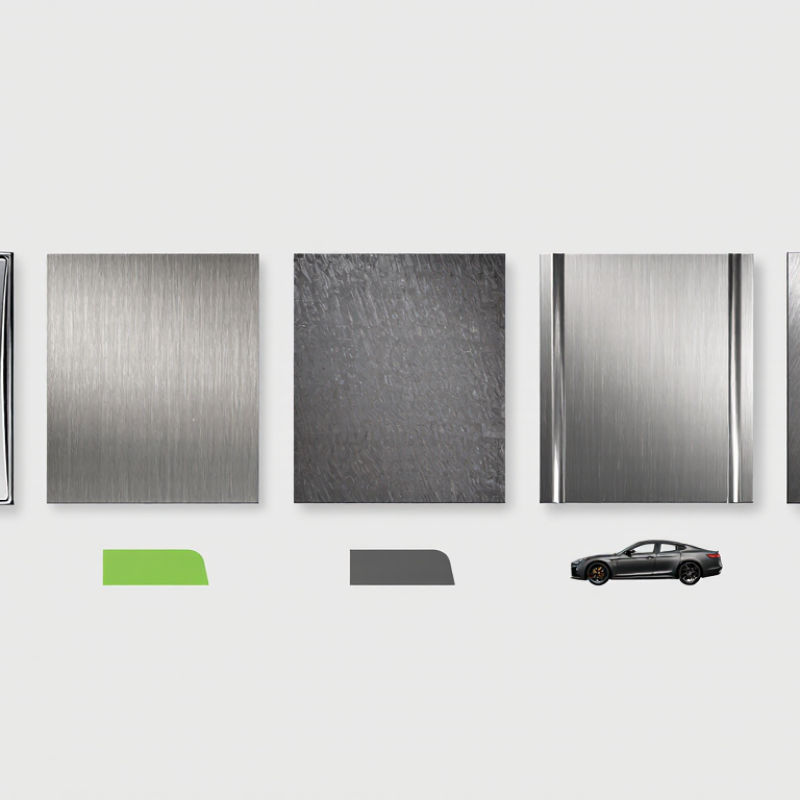
Austenitic Stainless Steel Sheet: Corrosion Resistance and Formability
Austenitic stainless steel sheet is valued for combining corrosion resistance with easy shaping. Its chromium-rich surface forms a thin passive layer that can renew itself when exposed to oxygen. Grades such as 304 suit many indoor and general-purpose applications, while molybdenum-bearing 316 offers better resistance to chloride exposure. Neither grade is immune to corrosion. Salt, trapped moisture, and poor cleaning can still cause staining or pitting.
This sheet bends well and can be drawn into sinks, housings, and curved panels. It also work-hardens during forming, so repeated bends may require more force than expected. Springback can shift a panel’s final angle. Make a test bend. Annealed austenitic sheet is usually nonmagnetic, though heavy cold working may make it slightly magnetic. That detail surprises people.
Surface condition matters as much as alloy choice. Scratches, embedded carbon-steel particles, or heat tint around a weld can weaken corrosion performance. Use clean tooling, and remove heat tint with a suitable finishing process. For a kitchen panel near frequent salt spray, 316 may be a sensible choice; for a dry interior enclosure, 304 may be adequate. The right choice still depends on exposure, thickness, finish, and forming demands. I would not select by grade name alone.
Ferritic Stainless Steel Sheet: Magnetic Properties and Everyday Uses
Ferritic stainless steel sheet is magnetic because its iron-rich ferrite structure responds to a magnetic field. A small refrigerator magnet can often cling to it. That is normal. Magnetism does not mean the sheet is poor quality, though it can surprise people who expect all stainless steel to be nonmagnetic. Chromium helps ferritic grades resist rust, while their nickel content is generally low. Their exact performance depends on grade, thickness, and surface finish.
In everyday settings, ferritic sheet may appear in appliance panels, kitchen equipment, vehicle exhaust parts, and interior trim. Its clean surface and practical corrosion resistance suit many indoor uses. Some grades also tolerate heat well, which is useful near ovens or exhaust systems. But “stainless” does not mean stain-proof. Salt, harsh cleaners, and trapped moisture can still mark the surface. A common mistake is judging suitability by magnetism alone. Check the grade and working conditions instead. Forming and welding behavior can vary, too, so a fabricator should confirm the material before cutting or joining it. I would not assume one ferritic sheet fits every kitchen or outdoor job; that shortcut can lead to disappointing results.
Martensitic Stainless Steel Sheet: Hardness and Strength
Martensitic stainless steel sheet is selected when hardness and strength matter more than easy forming. Its chromium-rich structure can be hardened through heat treatment, giving components useful resistance to wear and deformation. Grades such as 410 and 420 vary in carbon content, so their achievable hardness and toughness differ. That distinction matters. A sheet intended for a formed guard may need a different balance from a wear plate or a machine component.
In practice, higher hardness often brings lower ductility. Tight bends can crack, especially near cut edges or in material hardened before forming. Plan the forming sequence carefully: parts are often shaped in a softer condition, then heat-treated, though distortion and scale must be managed. Martensitic grades are magnetic and generally offer less corrosion resistance than common austenitic sheet grades. They can suit dry or mildly corrosive service, but exposure to salt, cleaning chemicals, or persistent moisture deserves closer review. A shop-floor check is useful, but it cannot replace a grade-specific data sheet or qualified heat-treatment guidance. Small details count. I would not treat a hardness reading as the whole answer. Sheet thickness, surface finish, welding, and final temper can all affect performance. Check the actual service conditions before specifying a grade.
Duplex Stainless Steel Sheet: A Balance of Strength and Corrosion Resistance
Duplex stainless steel sheet offers a useful balance: its mixed ferritic-austenitic structure provides strength while resisting corrosion in demanding environments. It can suit tanks, process equipment, and coastal enclosures exposed to chloride-bearing moisture. Its higher strength may also allow thinner sections in some designs. That matters.
ASTM A240/A240M specifies a minimum yield strength of 450 MPa for Grade 2205 sheet, compared with 170 MPa for 316L. These are specified minima, not guarantees for every finished part. The International Molybdenum Association’s duplex fabrication guidance also stresses that controlled welding and heat input help preserve corrosion performance. Duplex is not a cure-all: poor fabrication or an unsuitable grade can still cause problems.
Tips: Allow for stronger springback during forming, and use clean tools to avoid contaminating the sheet. For welded parts, follow a qualified procedure and check the service environment before choosing a grade. The extra planning is easy to underestimate.
What Are the Top Types of Stainless Steel Sheet Metal? - Duplex Stainless Steel Sheet: A Balance of Strength and Corrosion Resistance
| Duplex grade |
UNS designation |
Typical minimum yield strength* |
Approximate PREN range** |
Key characteristics |
Common sheet applications |
| Lean duplex 2101 |
S32101 |
About 450 MPa (65 ksi) |
About 26–30 |
High strength with lower nickel content than 2205; suitable for many moderate-corrosion environments. |
Storage tanks, structural panels, water-treatment equipment, and transport components. |
| Duplex 2304 |
S32304 |
About 400 MPa (58 ksi) |
About 25–27 |
Lean, low-molybdenum duplex grade with better strength than common austenitic grades and useful resistance to stress-corrosion cracking. |
Tanks, pressure equipment, pulp-and-paper components, and architectural or structural sheet parts. |
| Duplex 2205 |
S32205 / S31803 |
About 450 MPa (65 ksi) |
About 34–36 |
A widely used duplex grade combining high strength with strong resistance to chloride pitting, crevice corrosion, and stress-corrosion cracking. |
Chemical-processing equipment, heat exchangers, tanks, marine structures, and desalination systems. |
| Super duplex 2507 |
S32750 |
About 550 MPa (80 ksi) |
At least about 40 |
Higher chromium, molybdenum, and nitrogen levels provide very high strength and excellent resistance to chloride-bearing environments. |
Offshore equipment, seawater systems, desalination plants, and demanding chemical-process components. |
*Typical minimum yield strengths for annealed plate or sheet product forms; applicable values depend on the product specification and thickness. **PREN (pitting resistance equivalent number) is an approximate composition-based comparison, commonly calculated as %Cr + 3.3 × %Mo + 16 × %N; actual corrosion performance depends on grade, processing, surface condition, and service environment.
Precipitation-Hardening Stainless Steel Sheet: High-Strength Applications
Precipitation-hardening stainless sheet is chosen when a component needs high strength without excessive thickness.
Grade 630, often called 17-4 PH, gains strength through heat treatment. It suits aircraft fittings, pump parts, and compact machine components where a thin section must resist bending or repeated loads.
It is not a universal substitute for austenitic stainless steel.
The numbers are useful. ASTM A693 sets Grade 630 H900
minimum tensile strength at 190 ksi
and
minimum yield strength at 170 ksi,
about 1,310 and 1,170 MPa. These are specification thresholds, not guaranteed results for every finished part. Sheet thickness, processing, and heat-treatment control matter.
Tiny variations count.
In practice, the H900 condition can deliver impressive strength, but its hardness may complicate forming after treatment. Designers often form the sheet in a softer condition, then age it; distortion still needs checking.
Corrosion resistance is generally useful, yet it does not make the alloy immune to chloride attack or poor surface finishing.
A small test coupon can reveal more than a confident assumption.