Essential Tips for Choosing the Right Stainless Steel Sheet?
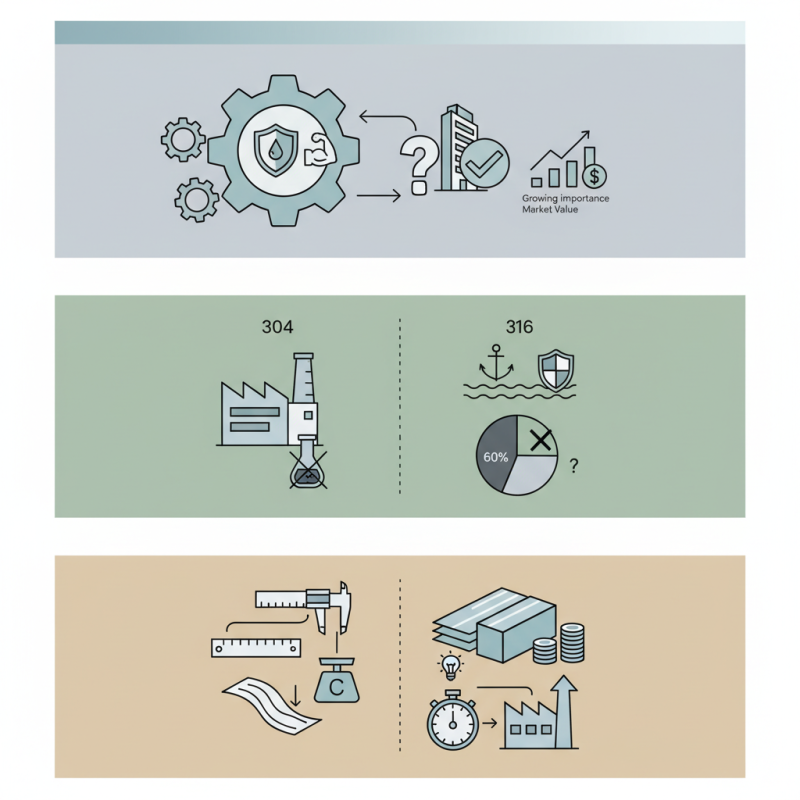
Choosing the right stainless steel sheet is crucial in various industries. The global stainless steel market is predicted to reach USD 165 billion by 2026, highlighting its growing importance. Factors such as corrosion resistance, strength, and aesthetics play critical roles in selection. Understanding these elements can help avoid costly errors.
Many buyers overlook specific grades and finishes. For instance, a 304 stainless steel sheet is ideal for general use, but might not suit environments with high chlorides. In contrast, a 316 sheet offers better protection, making it crucial for marine applications. Industry reports reveal that 60% of users select the wrong material due to inadequate knowledge.
Incorporating data on thickness and tolerances can greatly influence outcomes. A sheet that is too thin may buckle under stress, while one that is too thick can increase costs unnecessarily. Therefore, having reliable expertise in stainless steel sheets is vital. Taking time to understand these key factors leads to better decisions and operational efficiency.
Understanding Different Grades of Stainless Steel Sheets
When selecting stainless steel sheets, understanding the grades is crucial. Stainless steel is categorized into several grades based on properties and alloy composition. The most common grades are 304 and 316. Grade 304 has excellent corrosion resistance and is widely used in kitchens and appliances. About 70% of stainless steel production is 304 grade. This grade's versatility makes it a popular choice in various applications.
On the other hand, grade 316 contains molybdenum, enhancing its resistance to salt corrosion. This makes it suitable for marine environments. Studies indicate that 316 stainless steel can last significantly longer than 304 when exposed to harsh conditions. However, 316 is typically more expensive, which may not always justify its lifespan benefits for all users.
It's essential to assess the specific requirements of your project. Are you in a coastal area? If so, 316 might be worth the investment. Local climate and exposure to elements play a role in longevity. Keep in mind the importance of proper maintenance for any stainless steel sheet. Even the best grades can show wear and tear if neglected. Identifying your needs will aid in making a more informed decision.
Key Factors to Consider When Selecting Stainless Steel Sheets
When selecting stainless steel sheets, several key factors come into play. The first is the grade of stainless steel. For example, 304 stainless steel is known for its excellent corrosion resistance. However, it might not be suitable for all environments. Industries such as food processing often prefer 316 stainless steel due to its enhanced resistance to chlorides. A recent report by the Stainless Steel Council revealed that the demand for 316 stainless steel has increased by 20% in marine applications.
Another critical factor to consider is the thickness of the sheet. Thicker sheets offer greater durability and can withstand more weight. However, this can also increase costs. According to the Steel Association, a 20-gauge sheet is often more cost-effective than a 14-gauge. Still, its lower strength might not be sufficient for heavy-duty applications. Assessing project requirements and budgets is essential.
Surface finish is equally important. Polished finishes may enhance aesthetics, while rough finishes provide better bonding. The choice impacts both functionality and appearance. As noted in industry analyses, approximately 70% of users prefer a smooth finish for visual appeal. Yet, there are cases where rough finishes prove more practical, depending on usage criteria. Balancing these factors is key to making an informed choice.
Surface Finishes: Choosing the Right Appearance and Performance
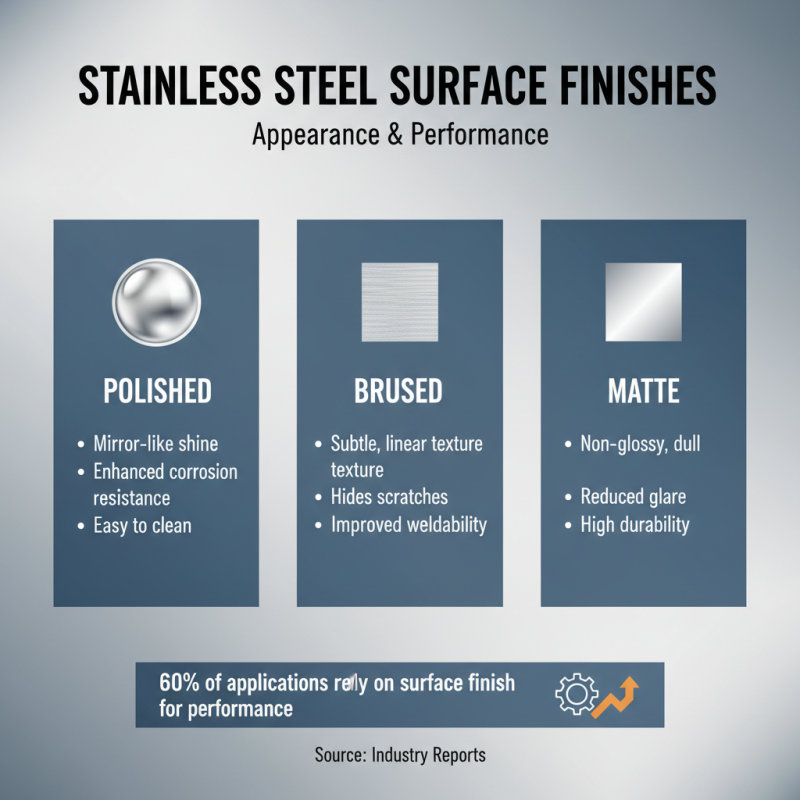
When selecting stainless steel sheets, surface finish is critical for both appearance and performance. A well-chosen finish can enhance corrosion resistance and improve aesthetic appeal. According to industry reports, approximately 60% of stainless steel applications rely on surface finish to meet specific performance requirements. Options include polished, brushed, and matte finishes. Each offers different benefits for welding, cleaning, and overall durability.
Polished finishes, for example, not only enhance aesthetic appeal but also provide smoother surfaces that resist dirt accumulation. However, they can be more prone to scratches. On the other hand, brushed finishes offer a balance between style and practicality. They tend to hide fingerprints and minor blemishes better than polished options, making them a preferred choice for many architects and designers. Industry studies show that nearly 40% of buyers prioritize maintenance needs alongside appearance.
Choosing between these finishes requires careful consideration. The production process can affect availability and cost. Some finishes may require additional treatments or coatings, impacting overall expenses. Understanding these nuances in surface finishes is essential for effective decision-making in procurement. The right choice can lead to increased satisfaction and performance in the long run.
Thickness and Dimensions: Importance in Application Suitability
When selecting stainless steel sheets, thickness and dimensions play a crucial role in determining application suitability. Industry standards suggest that stainless steel sheets typically range from 0.3 mm to 2.5 mm in thickness. Thicker sheets often provide greater strength and resistance to wear. For example, a thickness of 1.5 mm is commonly used in construction projects. If the application involves high-stress environments, one should consider sheets that are at least 2.0 mm thick.
Choosing the right dimensions is equally important. A sheet measuring 1 meter by 2 meters might fit your project needs better than a standard size. Custom dimensions can optimize material usage and cost-efficiency. Reports indicate that optimizing sheet size can reduce waste by up to 15%. However, not all suppliers offer customization.
Tip: Always verify the tensile strength and corrosion resistance ratings with industry standards. This data is vital for ensuring longevity. If thickness specifications are inconsistent, it may lead to serious structural failures. Remember, not every thickness will suit every project. Evaluate your requirements carefully to navigate these complexities.
Cost Considerations: Balancing Quality and Budget in Selection
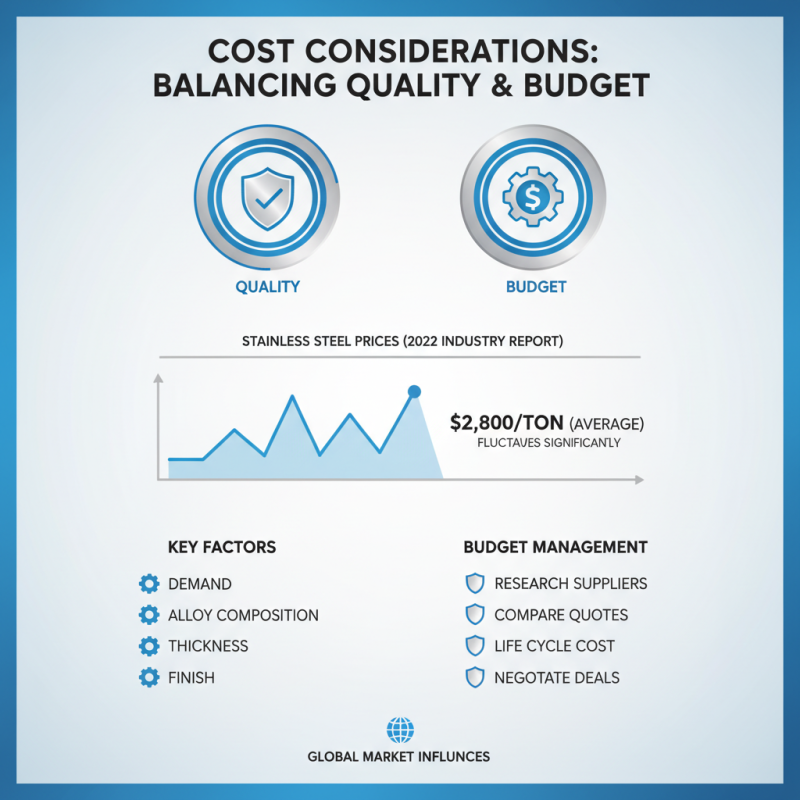
Choosing the right stainless steel sheet involves more than just quality. Cost considerations play a crucial role. According to a recent industry report, stainless steel prices fluctuate significantly, influenced by demand and alloy compositions. In 2022, the average price per ton was around $2,800, but it can vary widely based on thickness and finish. Understanding these dynamics is essential for budget management.
When selecting stainless steel sheets, financial balance is key. Higher quality often leads to increased costs. The right choice can prevent future expenses. A report found that lower-quality sheets lead to faster corrosion, resulting in higher maintenance fees over time. A well-informed decision can safeguard your investment and ensure longevity.
It's crucial to analyze suppliers and their pricing strategies. The variance can be substantial. Some providers might offer low initial costs but lack durability. This can result in spending more down the line. Always evaluate the total cost of ownership, not just the upfront price. Being mindful of these factors can lead to better financial outcomes and high-quality results.