

Top 10 Metal Roof Flashing Types Which Is Best?

A metal roof flashing system protects the vulnerable edges where panels meet walls, chimneys, valleys, vents, and skylights. It directs rainwater away from seams before moisture reaches the deck, insulation, or interior finishes. Small details matter. A lifted counterflashing edge can create a visible stain after one storm.

The NRCA Roofing Manual: Metal Panel and SPF Roof Systems explains that flashing design must accommodate drainage, movement, and compatible materials. FEMA’s Home Builder’s Guide to Coastal Construction, Technical Fact Sheet 7.2, also emphasizes properly integrated flashing around roof penetrations and wall connections. These recommendations support a practical question: which of the top 10 metal roof flashing types performs best for a specific roof?

There is no universal winner.

Step flashing may suit roof-to-wall transitions, while valley flashing handles concentrated runoff. Chimney flashing needs layered protection, not a single strip of metal. Drip edge flashing protects fascia and limits water intrusion at the eaves. Z-flashing can shield wall cladding joints, but poor laps may still invite corrosion.

The Architectural Sheet Metal Manual from SMACNA highlights accurate folds, seams, clearances, and substrate compatibility. Those requirements sound technical because they are. In real installations, rushed measurements and incompatible fasteners often defeat good materials. This guide compares ten common flashing types through durability, installation complexity, climate exposure, repair needs, and cost. It also questions common assumptions. Thicker metal is not automatically better. A premium alloy may fail when expansion, sealant, or drainage is poorly managed. The best metal roof flashing is the one that matches the roof geometry, local weather, and installer’s execution. (Sources: NRCA, 2016; FEMA P-499; SMACNA Architectural Sheet Metal Manual.)
Top 10 Metal Roof Flashing Types Which Is Best?

What Metal Roof Flashing Is and Why It Matters

Top 10 Metal Roof Flashing Types Which Is Best?

What Metal Roof Flashing Is and Why It Matters

Metal roof flashing is a shaped barrier that directs water away from seams, edges, walls, and roof openings. It usually sits beneath or beside roofing panels. Its job looks simple, but small installation errors can create expensive leaks.

During roof inspections, I often find trouble around chimneys, skylights, vents, and wall intersections. A gap as narrow as a pencil can let wind-driven rain reach the decking. Rusted edges, loose fasteners, and badly folded corners also deserve attention. Flashing is not decoration. It is part of the roof’s drainage system.

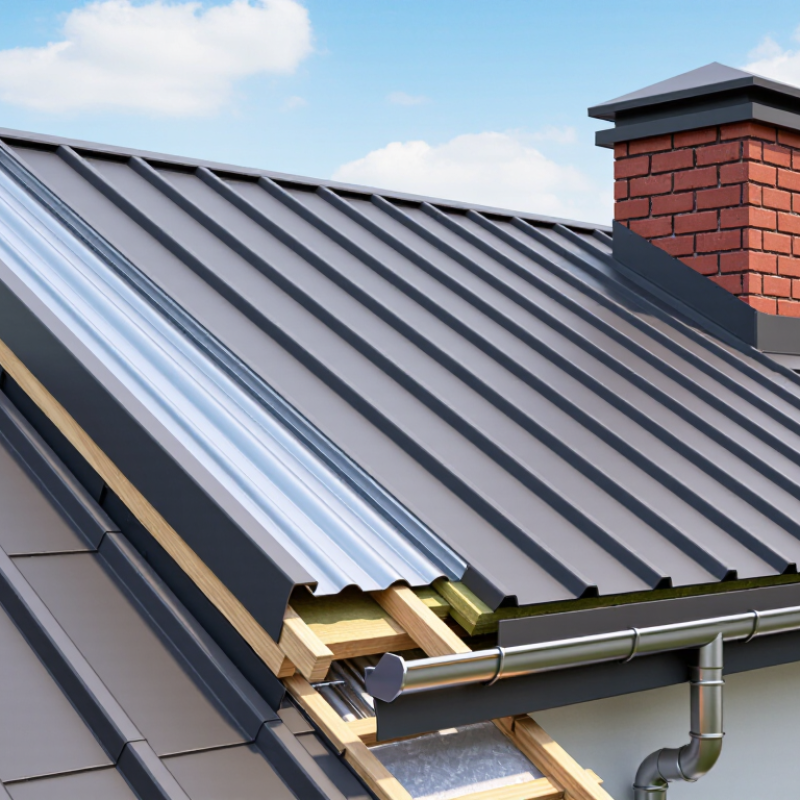
Common types include valley flashing, step flashing, counter flashing, drip edges, ridge flashing, and pipe boots. Each type serves a different location. Valley flashing carries water through roof channels. Step flashing protects wall joints. Drip edges guide water into gutters instead of behind the fascia. The best option depends on roof slope, panel design, climate, and nearby materials.

Installation quality matters as much as metal selection. Flashing should overlap in the direction of water flow. Fasteners need compatible washers and careful placement. Sealant may help, but it should not replace correct folding and lapping. Metal also expands and contracts with temperature changes. I once assumed a thick sealant bead meant stronger protection; later, I learned that movement can split it. A careful inspection checks overlaps, drainage paths, exposed cuts, and the underside of vulnerable joints.

How Roof Design Determines the Right Flashing Type

Top 10 Metal Roof Flashing Types: Which Is Best?

Roof geometry chooses the flashing, not the product label. A steep gable roof sheds water quickly. It needs durable drip-edge and valley flashing. A low-slope roof needs wider laps and carefully sealed transitions. On a dormer, step flashing must interlock with every panel. Headwall flashing handles uphill runoff. Sidewall flashing protects the vertical junction. Chimney, pipe-boot, ridge, and transition flashing solve different movement problems. Counterflashing covers the upper edge. There is no universal best type.

The 2023 NRCA Roofing Manual emphasizes compatible metals, correct laps, and positive drainage. FEMA’s P-499 guide identifies roof-to-wall intersections as vulnerable water-entry points. DOE Energy Saver guidance reports that cool roofs can remain up to 50°F cooler than conventional roofs. That temperature difference can increase metal movement. In practice, I inspect pitch, penetrations, runoff paths, snow, and wind exposure before selecting details. A beautiful valley can still leak. I have seen small geometry errors defeat expensive materials. That deserves a second look.

Tips: Match flashing width to roof pitch and exposure. Keep water moving downhill. Separate incompatible metals with approved barriers. Confirm every detail against local code and installation data. Photograph concealed laps before closure; later inspections become easier.

Top 10 Metal Roof Flashing Types Which Is Best? - How Roof Design Determines the Right Flashing Type
No. Flashing Type Primary Roof Location Roof Design or Condition That Determines Its Use Common Metal Options Main Function Key Installation Considerations Best Application Main Limitation
1 Step Flashing Where a sloped roof meets a vertical sidewall, such as a dormer or wall. Required when the roof plane rises along a wall and the joint needs protection at every shingle or panel course. Galvanized steel, aluminum, copper, or stainless steel. Directs water from the wall-roof intersection onto the roof covering. Installed in overlapping individual pieces that follow the roof slope and the covering profile. Sidewall intersections on pitched roofs and dormers. Poor overlap, exposed fasteners, or improper integration with the wall weather barrier can cause leaks.
2 Continuous Wall Flashing Along a long wall-to-roof intersection, commonly at a headwall or sidewall. Best suited to long, uninterrupted wall lines where a single continuous flashing element can reduce joints. Aluminum, galvanized steel, stainless steel, or copper. Collects and sheds water continuously away from the wall and roof junction. Must allow for thermal movement and should be integrated with the wall cladding or weather-resistive barrier. Long wall lines on low- to medium-complexity roof designs. Long pieces can buckle or pull away if movement is not accommodated.
3 Valley Flashing At the internal intersection of two sloping roof planes. Its configuration depends on valley geometry, roof pitch, runoff volume, and whether the valley is open or covered. Coated steel, galvanized steel, aluminum, copper, or stainless steel. Channels concentrated runoff through the valley and prevents water from entering the roof assembly. Requires adequate width, correct laps, secure edges, and an underlayment or membrane compatible with the roof system. Open valleys and roof designs with high runoff or multiple intersecting slopes. Debris accumulation, inadequate width, and incorrect slope transitions can create leakage or corrosion risks.
4 Headwall Flashing Where the upper edge of a sloped roof meets a vertical wall. Needed when water flows down the roof directly toward a wall or raised vertical obstruction. Galvanized steel, aluminum, copper, or stainless steel. Stops runoff from traveling behind the wall cladding or beneath the roof panels. Should extend sufficiently across the roof and be properly counterflashed or integrated with the wall system. Roof-to-wall joints at the uphill side of additions, dormers, and parapets. A short apron or poorly sealed wall transition can allow wind-driven rain behind the flashing.
5 Apron Flashing At the lower side of a roof-to-wall intersection or around certain roof penetrations. Used where water needs to be directed outward from the base of a wall, curb, or obstruction. Aluminum, galvanized steel, copper, or stainless steel. Forms a broad water-shedding transition from a vertical surface onto the roof. The upper edge must be secured and weather-sealed without blocking drainage or creating a reverse lap. Lower wall intersections, small roof projections, and simple roof-to-wall transitions. It may not provide sufficient movement capacity or drainage control for complex, long wall intersections.
6 Counterflashing Over base flashing at walls, chimneys, parapets, curbs, and other vertical surfaces. Used when a vertical masonry or cladding surface needs a separate protective layer over the primary flashing. Aluminum, galvanized steel, copper, stainless steel, or compatible sheet metal. Protects the upper edge of base flashing and sheds water over the joint. Should be built into masonry joints or securely integrated with the wall cladding rather than relying only on exposed sealant. Chimneys, masonry walls, parapets, and equipment curbs. It cannot compensate for missing or incorrectly installed base flashing beneath it.
7 Base Flashing At the bottom of chimneys, curbs, walls, and other vertical roof penetrations. Selected when a vertical obstruction requires a primary flashing layer that moves with the roof or adjacent construction. Galvanized steel, copper, stainless steel, or aluminum where compatible. Creates the first water-resistant transition between the roof surface and vertical obstruction. Must be integrated with the roof underlayment and covered by counterflashing or an equivalent upper layer. Masonry chimneys, roof curbs, parapets, and large rooftop penetrations. Exposed edges can deteriorate if counterflashing is absent, damaged, or incorrectly lapped.
8 Drip Edge or Eave Flashing Along roof eaves and, in some systems, along rakes or gable edges. Its profile is determined by the roof edge detail, gutter position, underlayment arrangement, and panel or shingle system. Coated steel, galvanized steel, aluminum, copper, or stainless steel. Moves water away from the roof edge, fascia, and roof deck while helping protect the edge of the covering. Must be installed in the correct sequence with the underlayment and gutter; the hem should not obstruct drainage. Most sloped roof edges, especially roofs discharging into gutters. An unsuitable profile may allow water to run behind the fascia or interfere with the roof covering.
9 Pipe Boot or Pipe Collar Flashing Around plumbing vents, flues, conduit, and other small round roof penetrations. Chosen according to pipe diameter, roof pitch, temperature exposure, and the profile of the metal panels. Galvanized steel, aluminum, stainless steel, or flexible metal-compatible assemblies. Seals the annular gap around a pipe while shedding water across the roof surface. The base must be shaped and sealed to the panel profile; high-temperature penetrations require heat-rated materials and clearances. Small, circular penetrations on exposed-fastener or concealed-fastener metal roofs. Rubber components can age from ultraviolet exposure, temperature changes, and movement if not properly selected.
10 Kick-Out Flashing At the lower end of a roof-to-wall intersection where the wall meets an eave or gutter. Needed when runoff from a sloped roof would otherwise discharge directly against the wall or behind the gutter end. Coated steel, aluminum, copper, or stainless steel. Diverts concentrated roof runoff into the gutter and away from the wall cladding. Must connect continuously with the wall flashing and gutter; its outlet needs enough projection to avoid wetting the wall. Roof edges terminating at exterior walls, especially where gutters are present. A missing or undersized kick-out can cause repeated staining, rot, and moisture damage at the wall corner.
Selection should also account for roof pitch, panel profile, runoff volume, thermal movement, local building requirements, material compatibility, and the expected exposure to wind, moisture, and corrosion.

The 10 Main Metal Roof Flashing Types Explained

The 10 Main Metal Roof Flashing Types Explained

Metal roof flashing directs water away from vulnerable joints. Valley flashing protects the roof’s internal channels, where runoff can become forceful. Step flashing shields the meeting point between roof panels and sidewalls. Headwall flashing covers the upper roof edge against a vertical wall. Sidewall flashing protects the roof’s sloping wall connection.

Apron flashing sits below wall intersections and guides water outward. Counterflashing covers the upper edge of base flashing, especially around masonry. Base flashing supports vertical surfaces near chimneys and wall penetrations. Chimney flashing usually combines step, counter, and saddle sections. Pipe flashing seals round vents, but its flexible collar can age faster than the roof. Kickout flashing moves water away from the wall and into the gutter.

In field inspections, I check overlaps before checking sealant. Water should shed across each joint, not stop at exposed fasteners. Valley pieces need enough width for heavy runoff and roof movement. Step flashing should remain hidden beneath wall cladding. Pipe flashing must fit tightly without crushing the metal roof ribs. Small gaps can become obvious after one winter.

One detail I once underestimated was kickout placement. A few inches can decide whether water stains the wall. Sealant helps, but it should not replace proper layering. Fasteners also need compatible materials to reduce corrosion. Local weather, roof pitch, snow, and building details change the best choice. Even experienced installers can miss a short transition. That deserves a second look.

How to Compare Flashing Materials, Seals, and Installation Methods

Top 10 Metal Roof Flashing Types Which Is Best?

Choosing metal roof flashing is less about appearance and more about movement, water paths, and installation discipline. Common options include step, counter, valley, ridge, wall, pipe, drip-edge, kick-out, end-wall, and transition flashing. For material comparison, aluminum resists corrosion but can deform easily. Galvanized steel offers strength, while stainless steel performs better in severe coastal conditions. Copper lasts well, but its runoff may stain adjacent surfaces.

Seals need equal attention. ASTM C920 class 50 sealants accommodate approximately 50% joint movement, making them useful around thermal-expansion zones. Lower-rated products may crack sooner when panels expand under direct sun. The NRCA Roofing Manual stresses compatible metals and properly lapped flashing. Mixing incompatible metals remains a common field mistake. It can accelerate galvanic corrosion.

Installation often decides the result. FEMA guidance recommends directing water away from wall intersections and securing flashings against wind-driven rain. A 2023 roofing labor report from the U.S. Bureau of Labor Statistics recorded a median annual wage above $48,000 for roofers, reflecting the value of trained installation rather than quick repairs. Site inspections often find exposed fasteners, short overlaps, and blocked drainage channels. Small details matter. I would still question any “best” flashing list that ignores roof pitch, climate, panel movement, and repair access.

Top 10 Metal Roof Flashing Types: Which Is Best?

This comparison rates common roof flashing applications on a 1–5 scale for expected durability, seal reliability, and installation simplicity. Higher scores indicate stronger overall performance under typical residential and light-commercial roofing conditions.

Copper and stainless-steel applications generally provide the strongest long-term durability and corrosion resistance. Step, apron, and valley flashing require careful overlapping and sealing, while pipe boots and vent flashings depend heavily on the quality and movement tolerance of their seals. Final selection should account for roof material compatibility, local weather, thermal movement, and installation details.

Which Metal Roof Flashing Type Best Fits Each Roofing Situation

Top 10 Metal Roof Flashing Types: Which Is Best?

The best metal roof flashing depends on the roof’s weakest transition. Step flashing suits sidewalls where shingles or panels meet masonry. Apron flashing protects front-wall joints, while counterflashing covers chimney edges. Use kick-out flashing at wall ends. It sends water into the gutter, not behind the siding.

Valley flashing needs careful selection. Open valleys usually perform well with corrosion-resistant steel or aluminum, especially during heavy rain. Closed valleys require tighter panel alignment and fewer exposed fasteners. Eave drip edge controls runoff at the roof boundary. Pipe boots seal plumbing penetrations, but heat and ultraviolet exposure can shorten their service life. Copper works well near historic masonry, yet it can stain adjacent materials. Galvanized steel offers strength and cost control. Aluminum is lighter, but expansion must be considered.

Details matter most.

The National Roofing Contractors Association’s Roofing Manual emphasizes continuous water-shedding layers and compatible metals at every joint. The Metal Construction Association reports that properly maintained metal roofing can last roughly 40–70 years, making flashing durability a long-term concern. FEMA’s P-499 guidance also stresses kick-out flashing where roofs meet walls, because concentrated runoff can damage wall assemblies. Field inspections often find small errors, not dramatic failures. A two-millimeter gap can matter. I would not select flashing from a material chart alone; coastal salt, snow depth, roof slope, fastener placement, and nearby dissimilar metals can change the correct choice. Even experienced installers occasionally miss that last transition.