


Top Membrane Structure Tent Manufacturers for Global Buyers
Choosing a reliable Membrane Structure Tent manufacturer requires more than comparing prices or viewing attractive photographs. Global buyers must examine engineering capability, material quality, production experience, and long-term service. A tent may look elegant beside a resort pool, yet fail when drainage is poor or wind loads are underestimated. The strongest manufacturers explain their design calculations clearly. They also identify the membrane fabric, steel grade, fire performance, waterproofing method, and expected service life.
Frei Otto, a leading pioneer of lightweight structures, once said, “I am interested in finding the forms of nature and learning from them.” His idea remains relevant today. A successful Membrane Structure Tent should feel light, but its hidden structure must be carefully engineered. Buyers should request project references, factory inspection evidence, installation procedures, and maintenance guidance. Ask about snow loads, ultraviolet exposure, coastal corrosion, replacement membranes, and warranty response times. Details matter.
No supplier is perfect. Brochures can hide limitations. Some impressive projects may not reflect current production quality. A manufacturer with fewer photographs may still offer better technical control. This guide reviews leading manufacturers for international buyers, focusing on practical reliability rather than marketing language. It considers design support, fabrication precision, compliance documentation, delivery coordination, and after-sales communication. A thoughtful buyer should remain cautious, because even a strong design can disappoint when local installation is rushed or site conditions change. Careful questions prevent expensive surprises.
Membrane Structure Tents: Definition, Uses, and Main Design Types
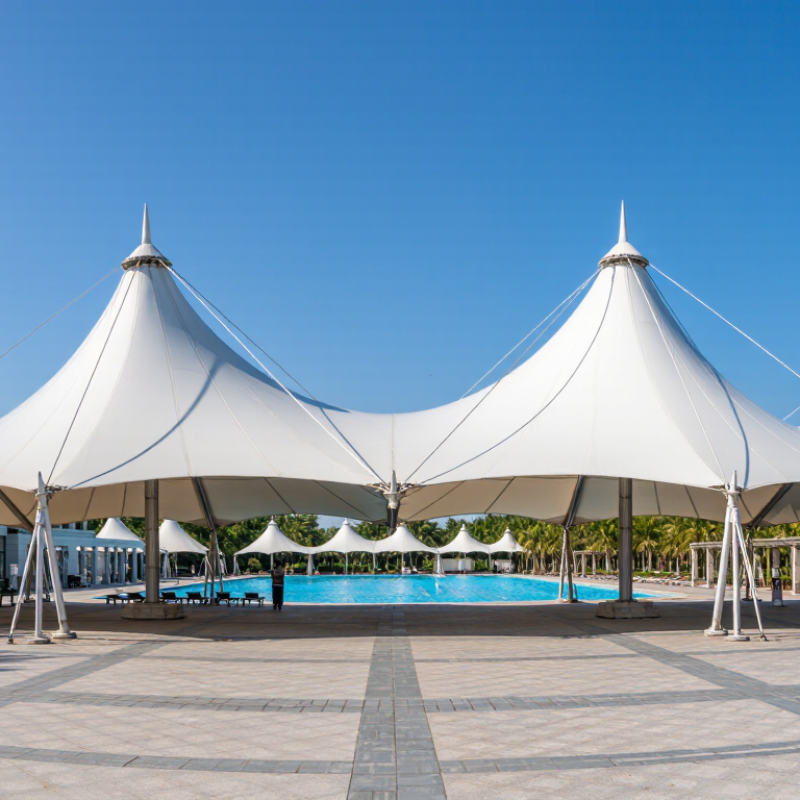
A membrane structure tent is a lightweight shelter formed by fabric, tension, and supporting elements. Unlike conventional tents, its roof often works as a designed structural surface. Common materials include PVC-coated polyester, PTFE-coated fiberglass, and ETFE film. Each option differs in durability, light transmission, maintenance, and cost. Careful engineering is essential.
These tents serve as event venues, sports facilities, exhibition halls, warehouses, transport shelters, and outdoor dining spaces. Their broad spans can reduce the need for interior columns.
The main design types include tension membrane tents, frame-supported tents, air-supported structures, and cable-net systems.
Tension membrane designs create sharp, sculptural forms through cables and fabric.
Frame-supported models offer predictable layouts and simpler installation.
Air-supported structures provide large column-free interiors, but they depend on continuous air pressure. That dependency deserves more attention than it often receives.
Tips: Check wind loads, snow conditions, drainage paths, fire performance, and local permits before selecting a design. Ask for structural calculations, fabric specifications, seam details, and maintenance guidance. Inspect anchor points after severe weather. Small drainage mistakes can create large problems. In practice, an attractive shape may limit usable floor space. Buyers should review drawings with an independent engineer, not rely only on rendered images. Sustainability claims also need verification, because fabric replacement and end-of-life recycling vary by material and region.
Key Standards for Evaluating Global Tent Manufacturers
Global buyers should evaluate tent manufacturers through measurable standards, not polished catalogs. Experience matters, but it must be visible in completed projects. Ask for dated installation photos, engineering drawings, and references from similar climates. A manufacturer serving coastal sites should understand salt air, sudden gusts, and drainage. Factory capacity also matters. Inspect welding areas, fabric cutting lines, and final inspection records when possible. A virtual tour is useful, though it cannot replace an independent visit.
Material control is a practical test of expertise. Request fabric specifications, coating data, seam strength, and UV resistance results. Confirm that steel or aluminum components match the approved drawings. Check whether each batch has traceable records. Safety documentation should align with the destination’s wind, snow, fire, and occupancy requirements. Independent laboratory reports carry more weight than unverified certificates. The wording matters. “Tested” is not the same as “compliant.”
Reliable manufacturers explain tolerances, maintenance intervals, packing methods, and installation limits clearly. Their manuals should show anchor layouts, torque values, and replacement procedures. Ask how defects are logged and resolved after delivery. Response time is evidence. So is accountability. Pricing deserves careful review; a low offer may exclude foundations, transport, testing, or site supervision. No factory is flawless. I would still question suppliers that hide minor failures, because honest records often reveal stronger quality systems. Language, time zones, and local partners can affect support, so these details deserve written confirmation before purchase.
Leading Membrane Structure Tent Manufacturers by Market Strength
Market strength now defines the leading membrane structure tent manufacturers. Buyers examine more than appearance, capacity, and export claims. They compare engineering depth, delivery consistency, and regional service.
Grand View Research reported that the global tensile fabric structures market could grow at about 5.8% annually through 2030. This growth supports manufacturers with proven design systems and repeatable production controls. Strong suppliers usually provide wind-load calculations, fire-performance documentation, and traceable fabric certificates. These details matter when a tent covers airports, exhibitions, or large public venues.
MarketsandMarkets places modular construction among rapidly expanding building sectors, driven by shorter installation periods and controlled factory production. Membrane tents benefit from the same pressures. Manufacturers with CNC cutting, automated welding, and experienced installation teams can reduce site waste and schedule risks. However, production scale alone does not prove market leadership. After-sales response remains uneven, especially across distant regions. That weakness deserves more attention.
Experienced buyers should request project references from similar climates. A snow-region installation cannot fully validate tropical performance. They should also inspect warranty terms, replacement procedures, and local compliance support. Data reports show market direction, not supplier reliability. Real strength appears in measured tolerances, documented testing, and how calmly a manufacturer handles an imperfect project.
Materials, Engineering, Customization, and Production Capabilities
Top Membrane Structure Tent Manufacturers for Global Buyers
Reliable membrane structure manufacturers begin with material discipline. PTFE-coated fiberglass offers strong UV resistance and long service life. PVC-coated polyester usually provides lower initial cost and flexible color options. ETFE film suits lightweight roofs, but it demands careful cushion design and pressure control. Buyers should request fabric weight, coating thickness, fire performance, and tested tensile strength. Marketing language alone is not evidence.
Engineering quality appears in the details. A competent team checks wind loads, snow loads, drainage paths, and foundation reactions before production. Digital models can expose clashes around columns, cables, and gutters. Factory drawings should identify weld widths, seam directions, bolt grades, and tolerances. Small errors matter. A misplaced drain can leave water above a busy entrance.
Customization should remain practical. Manufacturers may adjust spans, entrance heights, lighting openings, colors, and acoustic layers. However, unusual curves can increase cutting waste and installation time. Production capability includes CNC cutting, controlled welding, dimensional inspection, and traceable material records. Buyers should ask for sample seams and inspection photographs. Visiting the workshop is better when possible, though it never replaces independent review. No factory is perfect. Even experienced suppliers can underestimate shipping constraints or local installation skills. Clear revisions, staged approvals, and realistic delivery schedules reduce those risks.
Top Membrane Structure Tent Manufacturers for Global Buyers
Materials, engineering, customization, and production capabilities
The chart compares typical service-life ranges for commonly used membrane materials in tensile structures. Actual performance depends on UV exposure, climate, coating quality, structural design, installation, cleaning, and maintenance. Buyers should request verified technical datasheets, fire classifications, wind-load calculations, warranty terms, and quality-control records from each manufacturer.
How Global Buyers Can Compare Suppliers and Complete Procurement
Global buyers should compare membrane structure tent manufacturers through evidence, not polished catalogues. The World Bank’s 2023 Logistics Performance Index evaluates 139 economies across customs, infrastructure, tracking, and delivery timeliness. These factors directly affect project risk. Ask each supplier for production capacity, export references, packing methods, and typical port-to-site lead times. A low factory price can become expensive after freight, duties, installation, and storage.
Technical comparison needs a consistent specification. Request structural calculations for local wind, snow, seismic, and drainage conditions. Check fabric weight, coating type, UV resistance, flame performance, seam strength, and expected service life. Verify certificates with the issuing body. Review welding samples and inspect a completed frame, not only digital drawings. I have found that small details matter: bolt labeling, spare membrane sections, and clear installation manuals can prevent costly site delays. They are often overlooked.
Procurement teams can score suppliers across quality, engineering support, delivery reliability, warranty terms, and after-sales response. Deloitte’s 2024 Global Chief Procurement Officer Survey highlights resilience and digital visibility as major procurement priorities. Use milestone payments linked to approved drawings, factory inspection, and shipment documents. Keep a written change-control process. It protects both sides. Still, no scoring sheet is perfect. Factory audits may capture one good production week, while local subcontractors can change the installation result. Confirm who controls engineering, fabrication, transport, and on-site commissioning before signing.


