





China Top 10 Pouch Cell Trimming Machine Suppliers?
Choosing a reliable Pouch Cell Trimming Machine supplier requires more than comparing catalog prices. This guide introduces ten China-based manufacturers serving battery producers, equipment integrators, and research facilities. It focuses on measurable production needs, including cutting accuracy, edge quality, machine stability, and technical support. A well-built machine should trim pouch cell edges cleanly, without tearing aluminum laminate or leaving harmful burrs. It should also maintain alignment across repeated cycles. Small defects can become serious problems during sealing, stacking, or formation.
The evaluation considers equipment design, automation options, customization ability, inspection records, and customer service. Practical buyers should ask for sample trimming tests using their own cell sizes and materials. They should also review cycle-time data, tooling replacement procedures, safety features, and software compatibility. Factory visits, video inspections, and reference checks can reveal details hidden in brochures. No ranking is permanent. Supplier capabilities may change with new projects, staff, or production demands. That limitation matters. A company with strong engineering skills may still provide slow communication or weak overseas support. Conversely, a smaller supplier may offer better customization for a demanding application. Readers should verify certifications, factory capacity, warranty terms, and commissioning support before signing contracts. These points help turn a general supplier list into a practical sourcing decision.
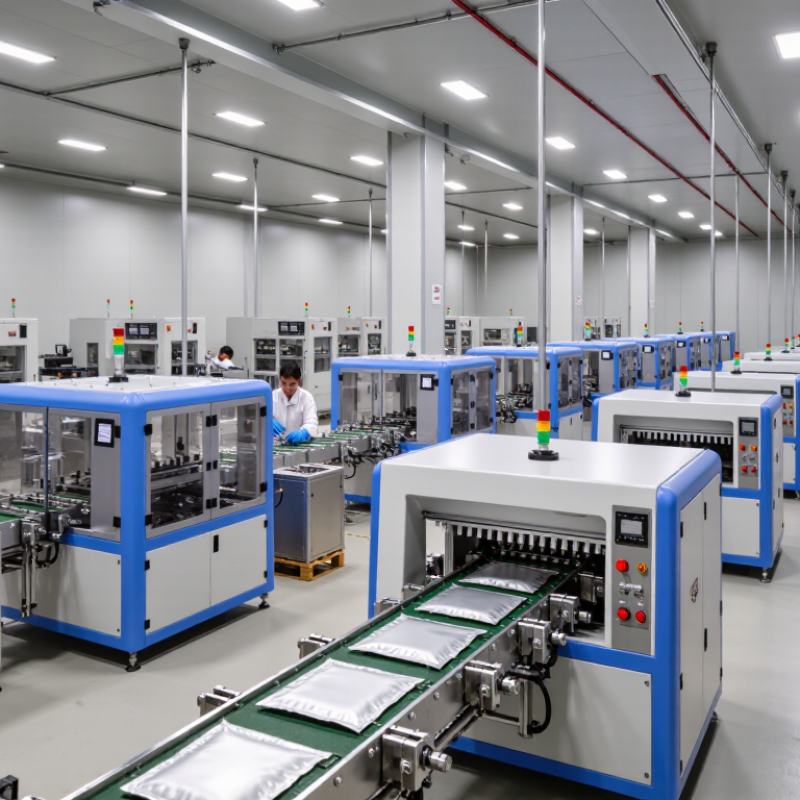
What Is a Pouch Cell Trimming Machine?
A pouch cell trimming machine removes excess aluminum-plastic film after heat sealing. It creates a clean, consistent edge around the battery’s sealed body. The machine usually combines positioning fixtures, cutting tools, sensors, and waste collection. Some systems also fold or press the trimmed edge. They should not be confused with tab-cutting equipment.
In factory trials, trimming accuracy affects insulation distance, cell appearance, and downstream module assembly. A blade that cuts too deeply may damage the seal. A loose fixture may create uneven edges. The International Energy Agency reported that global electric-vehicle battery demand exceeded 750 GWh in 2023. It also recorded strong year-on-year growth. This scale increases pressure for stable, repeatable pouch processing. Still, high speed alone is not enough. A faster machine can produce more defects when alignment control is weak.
Tips: Check cut-edge consistency under magnification. Measure seal width at several points, not only one. Review dust levels after continuous operation. The machine should support recipe control, traceability, and quick tool replacement. Operators should test different film thicknesses before mass production. A polished edge does not always mean a reliable seal. This assumption deserves review. Data from the IEA Global EV Outlook 2024 and market studies on lithium-ion manufacturing capacity support the need for better process control, but site conditions still decide actual performance.
How Pouch Cell Trimming Machines Work
Pouch cell trimming machines remove excess aluminum-plastic film after heat sealing. The sealed cell enters a rigid fixture, where sensors check its position and thickness. A servo-driven blade then follows a programmed cutting path around the pouch edge. The cut must stay close to the seal, but never damage it. Small errors can expose internal layers or create weak corners.
The machine usually combines vision inspection, vacuum clamping, edge trimming, and scrap collection. Clean suction is important because loose film can contaminate later assembly. According to the International Energy Agency’s Global EV Outlook 2024, electric vehicle battery demand exceeded 750 GWh in 2023. That scale makes stable trimming valuable. BloombergNEF reported an average battery pack price of 115 dollars per kWh in 2024, increasing pressure to reduce material waste and rework.
In practical production, operators adjust blade speed, cutting depth, fixture pressure, and pouch alignment. Too much pressure may deform the cell. Too little pressure can cause movement.
Not perfect.
A reliable machine records cutting force, inspection images, and rejected-cell rates. These records support traceability and process improvement. However, trimming alone cannot correct poor sealing or uneven film forming. Engineers must review the whole line. A faster cutter may still deliver worse results when its dust control or positioning accuracy is weak.
Key Criteria for Evaluating Chinese Suppliers
Selecting among China’s top 10 pouch cell trimming machine suppliers requires more than comparing prices. IEA’s Global EV Outlook 2024 reported that electric vehicle battery demand exceeded 750 GWh in 2023, rising about 40%. This growth increases pressure on trimming accuracy, cycle time, and equipment availability.
Evaluate suppliers through recorded production evidence. Ask for trimming results on your actual aluminum-plastic film, not only a showroom sample. Check burr height, edge consistency, dust control, and scrap rates after continuous operation. A practical trial should run several hundred cells. Inspect every batch under magnification. Small defects matter.
Confirm machine stability at the promised speed. Request data for uptime, changeover time, blade life, and average maintenance intervals. SNE Research reported approximately 706 GWh of global EV battery usage in 2023, showing why scalable equipment matters. However, high capacity claims can hide frequent stops. I would also examine electrical schematics, spare-parts availability, software permissions, and remote service response times. Certifications help, but they do not replace process records. ISO documentation is not proof of trimming quality. One weakness remains easy to miss: suppliers may provide excellent engineering support before payment, then slower assistance after installation. Speak with recent users and verify factory acceptance data independently.
China’s Top 10 Pouch Cell Trimming Machine Suppliers
China’s pouch cell trimming machine sector is expanding with battery manufacturing. The International Energy Agency reported that China produced over 70% of global electric vehicle batteries in 2023. This scale increases demand for accurate edge trimming, stable film handling, and faster production cycles.
A reliable top-10 supplier shortlist should consider cutting accuracy, burr control, changeover time, and after-sales response. Machines should maintain consistent pouch edges across different cell sizes. In practical factory trials, operators should inspect samples under magnification. Small film tears can later affect sealing quality. The China Battery Industry Association also highlights automation and process consistency as major development priorities. However, published supplier rankings are not always independently verified. A polished showroom is not enough.
Tips: Request a live cutting test using your own pouch material. Check edge smoothness, dust collection, blade replacement time, and safety interlocks. Ask for three-year operating data, not only brochure specifications. Energy consumption matters. So does training.
Experience shows that the best machine is not always the fastest one. A slower system with fewer defects may reduce total production losses. Buyers should compare yield, maintenance records, spare-part availability, and integration with forming and sealing equipment. Some suppliers provide strong engineering support, while others still need improvement in documentation. That difference becomes obvious after installation.
| Rank | Anonymous Supplier Profile | Typical Machine Configuration | Applicable Pouch Cell Format | Typical Throughput | Trimming Accuracy | Automation Level | Quality and Safety Documentation | Typical Lead-Time Range | Best-Fit Purchasing Scenario |
|---|---|---|---|---|---|---|---|---|---|
| 1 | Supplier Profile A | Servo-driven trimming system with programmable recipe control | Small to large laminated pouch cells | 40–60 cells/min | ±0.10–0.20 mm | High | CE option, electrical schematics, operation manual, factory acceptance testing | 10–16 weeks | High-volume production lines requiring repeatable edge trimming |
| 2 | Supplier Profile B | Automatic film-edge trimming machine with vision-assisted alignment | Standard pouch cells with multiple length and width recipes | 35–55 cells/min | ±0.15–0.25 mm | High | Process parameter records, risk assessment, preventive-maintenance schedule | 12–18 weeks | Manufacturers needing quick recipe changes between cell models |
| 3 | Supplier Profile C | Rotary knife trimming machine with automatic waste collection | Medium-format pouch cells | 30–50 cells/min | ±0.20–0.30 mm | Standard | Machine drawings, spare-parts list, basic electrical safety documentation | 8–14 weeks | Cost-conscious lines with stable, single-format production |
| 4 | Supplier Profile D | Linear servo trimming platform with adjustable tooling | Small and medium pouch cells | 25–45 cells/min | ±0.15–0.25 mm | High | Factory acceptance test, tooling validation report, user training documents | 12–20 weeks | Flexible production environments with frequent product changeovers |
| 5 | Supplier Profile E | Compact semi-automatic trimming station with manual loading | Prototype, pilot-line, and low-volume pouch cells | 10–25 cells/min | ±0.25–0.40 mm | Standard | Operation instructions, basic safety checklist, tooling maintenance guidance | 6–10 weeks | Research laboratories and pilot-scale battery production |
| 6 | Supplier Profile F | Integrated trimming and edge-inspection workstation | Medium and large pouch cells | 25–45 cells/min | ±0.15–0.30 mm | High | Inspection records, traceability interface, alarm and interlock documentation | 14–22 weeks | Lines requiring trimming verification and production traceability |
| 7 | Supplier Profile G | Pneumatic trimming machine with interchangeable cutting dies | Fixed-size pouch cells | 20–35 cells/min | ±0.25–0.40 mm | Medium | Die drawings, pneumatic circuit diagram, recommended spare-parts list | 8–13 weeks | Applications prioritizing simple operation and lower capital cost |
| 8 | Supplier Profile H | Modular trimming unit designed for line integration | Custom pouch-cell dimensions | 20–40 cells/min | ±0.20–0.35 mm | High | Interface specifications, communication protocol documents, integration checklist | 14–24 weeks | Battery plants connecting trimming with sealing, folding, or inspection equipment |
| 9 | Supplier Profile I | Manual-assisted trimming machine with pneumatic clamping | Small-batch and custom pouch cells | 8–20 cells/min | ±0.30–0.50 mm | Medium | Basic user manual, safety instructions, tooling adjustment procedure | 5–9 weeks | Small manufacturers and engineering validation projects |
| 10 | Supplier Profile J | Custom-built trimming machine with application-specific tooling | Non-standard or oversized pouch cells | 15–35 cells/min | ±0.20–0.40 mm | Standard | Design review documents, acceptance criteria, customized maintenance package | 16–26 weeks | Projects requiring dedicated tooling or non-standard cell geometries |
How to Select the Right Supplier for Your Production Needs
When comparing China’s top 10 pouch cell trimming machine suppliers, production fit matters more than ranking. The IEA’s Global EV Outlook 2024 reported that electric vehicle battery demand exceeded 750 GWh in 2023. Manufacturing capacity also surpassed 2.5 TWh. This pressure makes stable trimming performance essential. Examine edge quality, burr control, dust collection, cycle time, and compatibility with your aluminum-plastic film. Ask suppliers to run your actual cell dimensions, not only a standard sample.
A reliable supplier should provide measured yield data, machine availability, and traceable inspection records. Request factory acceptance testing, site acceptance testing, and clear spare-parts support. Check whether the control system records blade life, cutting pressure, alarms, and rejected cells. An attractive quotation may hide weak commissioning support. That mistake is costly. Do not trust a claimed 99% yield without raw production logs and defined sampling methods. A good technical review should include operators, maintenance engineers, and quality staff.
Tips: Build a weighted scorecard before contacting suppliers. Give higher scores to trimming accuracy, repeatability, service response, and proven integration. Ask for two comparable customer references, but verify the machine’s material, output, and operating shifts. McKinsey’s battery manufacturing research emphasizes that yield improvement strongly affects cell economics. Therefore, calculate total ownership cost, including blades, downtime, training, validation, and energy use. The cheapest machine is rarely the cheapest production decision.


