


How to Find Top China Aluminum Roof Panels Suppliers?
Finding reliable aluminum roof panels suppliers in China requires more than comparing factory prices. Product quality, alloy consistency, coating performance, and export experience can vary significantly between vendors. Buyers should examine test reports, production photos, project references, and sample panels before discussing long-term contracts.
Industry data shows why this search deserves care. Fortune Business Insights valued the global metal roofing market at approximately USD 10.12 billion in 2023. Its report projects continued growth through 2032, driven by construction activity and demand for durable building materials. Grand View Research also identifies aluminum as a major growth material because of its low weight, corrosion resistance, and recyclability. These reports cover broader markets, not aluminum roof panels alone. That limitation matters.
Roofing specialist Todd Miller, president of Isaiah Industries, offers a practical warning: “A metal roof is only as good as its installation.” His point applies to supplier selection. A strong panel can still fail when flashing, fasteners, or joint details are poorly designed. Look closely at those details.
A dependable Chinese supplier should explain alloy grades, panel thickness, coating standards, load ratings, packaging methods, and warranty conditions. Ask for independent inspection records. Request clear evidence of previous projects in similar climates. A factory visit can reveal more than a polished website. Still, no single document proves everything. Supplier claims require verification, and even experienced buyers can miss small warning signs. This guide examines how to compare manufacturers, validate technical information, and choose a partner for consistent aluminum roof panels.
Define Your Aluminum Roof Panel Requirements and Project Standards
Before contacting China aluminum roof panel suppliers, define the roof system in measurable terms. Record roof length, slope, panel width, joint layout, and drainage direction. Specify the aluminum alloy, temper, panel thickness, and acceptable dimensional tolerance. Small errors become expensive.
Your project standards should cover wind pressure, snow load, seismic conditions, fire performance, thermal movement, and corrosion exposure. A coastal warehouse may require stronger coating protection than an inland workshop. State the required finish, color tolerance, reflectivity, and expected service life. Include insulation, vapor control, fastener material, and compatible sealants. Do not guess these details. Local building codes and the project engineer’s calculations should control the specification.
When reviewing suppliers, request technical datasheets, coating test results, alloy certificates, and recent production samples. Ask how panels are checked after forming, cutting, and packaging. A reliable supplier should explain its inspection process without vague promises. Compare sample dimensions with your drawings, especially edge folds and fixing holes. Request a small trial order before approving full production. This step can reveal scratches, uneven coating, or poor protective film adhesion. I have seen specifications look complete while omitting replacement procedures for damaged panels. That omission deserves attention. Also verify packing methods, moisture protection, labeling, and loading records. These practical details often decide whether panels arrive ready for installation or require costly rework.
Compare China Supplier Types, Product Ranges, and Manufacturing Capabilities
Finding top China aluminum roof panel suppliers requires comparing supplier types, not just online prices. China produced about 59% of global primary aluminum in 2023, according to the U.S. Geological Survey’s Mineral Commodity Summaries 2024. This scale supports strong material access, but it does not guarantee reliable roofing quality. Trading companies often offer wider catalogs and smaller orders. Specialized factories usually provide better control over alloy, coating, forming, and packaging. Ask for the manufacturing address, production photos, and recent inspection records.
Product range matters when project details change. A capable supplier should handle flat panels, corrugated sheets, standing-seam systems, insulated panels, and custom flashings. Request alloy and temper information, such as 3003-H24 or 3105-H14, rather than accepting “premium aluminum.” The International Aluminium Institute reports that buildings and construction consume roughly 25% of global aluminum demand. That makes lifecycle performance important. Ask for coating thickness, color consistency, salt-spray results, thermal movement allowances, and recycled-content data. I would not trust a sample alone. Batch consistency can fail quietly.
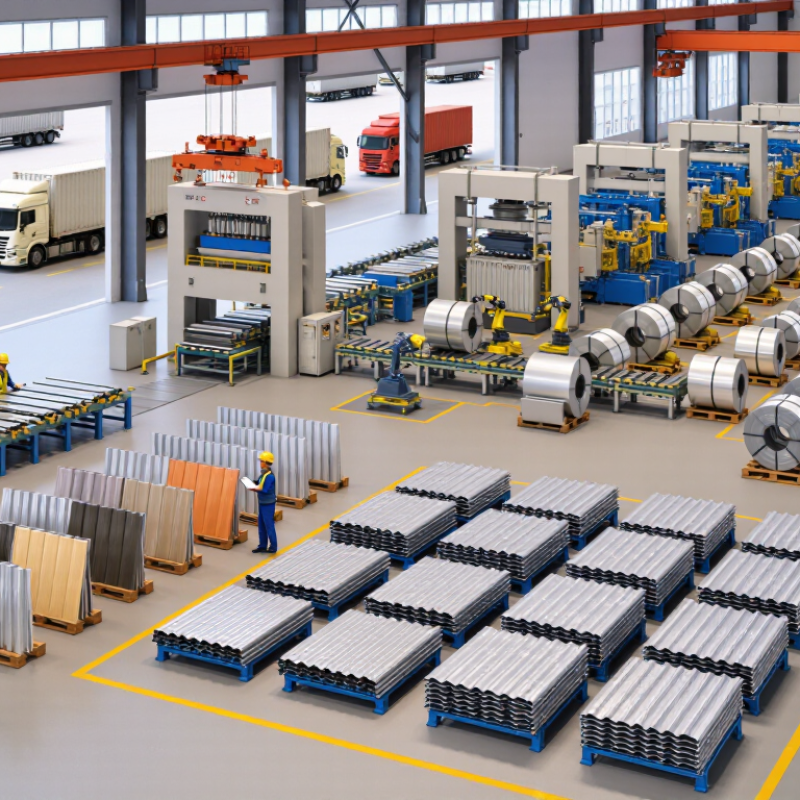
Manufacturing capability should match your risk level. Check whether the supplier controls slitting, roll forming, coating, CNC cutting, and final inspection in-house. Independent testing should verify thickness, tensile strength, adhesion, flatness, and water resistance. The IAI states that recycled aluminum uses about 5% of the energy required for primary production, but recycled input still needs traceability. A supplier may claim sustainability too casually. Compare factory capacity, lead times, minimum order quantities, export experience, and corrective-action records before choosing.
Verify Supplier Qualifications, Quality Controls, and Industry Certifications
How to Find Top China Aluminum Roof Panels Suppliers?
A reliable supplier should provide verifiable business qualifications before discussing prices. Request its registration details, factory address, production capacity, and export experience. A video tour helps, but an independent factory audit offers stronger evidence. Check whether the listed workshop actually produces aluminum roof panels. Some suppliers mainly trade products made elsewhere.
Quality controls deserve close attention. Ask for material certificates showing aluminum alloy, thickness, and temper. Review inspection records for coating thickness, color consistency, panel dimensions, and surface defects. Request samples from regular production, not specially prepared pieces. Test the samples for adhesion, bending performance, water resistance, and dimensional stability. Small details matter. A clean edge can reveal careful processing.
Industry certifications should be checked, not merely photographed. Confirm the certificate number, issuing organization, validity period, and covered products. An ISO 9001 certificate may indicate a management system, but it does not automatically prove excellent roof panels. Also review relevant fire, wind-load, coating, or environmental test reports for your target market. Ask whether testing used the same alloy, coating, and panel structure you will purchase.
This is where many evaluations become weak. I once assumed a complete document package meant complete quality control; that assumption was too generous.
Keep written records of every answer, sample result, and corrective action. Reliable suppliers accept scrutiny and explain limitations clearly.
Evaluate Pricing, Customization, Lead Times, and Export Services
How to Find Top China Aluminum Roof Panels Suppliers?
Price is not the first number to compare. Aluminum alloy, panel thickness, coating system, profiles, packaging, and Incoterms can change the final cost significantly. The International Aluminium Institute reports that recycling aluminum requires about 95% less energy than primary production. Ask suppliers for recycled-content evidence, alloy certificates, and coating test results. A low quotation may hide thinner panels, weaker packaging, or expensive replacement costs. Numbers matter.
Customization should be measured, not promised. Request drawings showing dimensions, rib height, hole positions, tolerances, and color standards. Confirm whether samples are free and whether tooling charges are refundable. I would check coating adhesion, gloss, and salt-spray performance through independent testing. Small details matter. The Global Market Insights roofing report identifies durability and energy efficiency as major demand drivers, but market reports cannot verify one factory’s workmanship.
Lead times should include approval, production, inspection, and port handling. Ask for a written schedule with delay responsibilities. Export experience requires more than a shipping agent. Verify commercial invoices, packing lists, certificates of origin, pallet strength, container loading photos, and the correct HS classification. The World Bank Commodity Markets Outlook shows that industrial metal prices remain exposed to market volatility, so quote validity should be clearly stated. My own caution is simple: never judge reliability from polished catalogs alone. Review production records, independent inspections, and two recent export references.
Select a Reliable Supplier Through Samples, Audits, and Contract Review
Finding reliable China aluminum roof panel suppliers requires more than comparing online prices. Begin with samples. Request panels matching your planned thickness, coating, alloy, color, and profile. Examine the edges, surface finish, protective film, and locking joints under normal lighting. Ask for test data covering load capacity, corrosion resistance, coating adhesion, and dimensional accuracy. A sample may look excellent while production quality varies. Test more than one batch.
A practical factory audit reveals details photographs cannot show. Check raw material storage, cutting equipment, coating lines, quality records, and packaging areas. Confirm whether inspectors measure thickness and color consistency during production. Review calibration certificates and traceability procedures. Speak with the quality manager, not only the sales representative. Keep written audit findings, including weaknesses. I once ignored inconsistent packaging during an evaluation, and the resulting damage created avoidable delays.
Contract review protects the project after supplier selection. Define alloy grade, panel dimensions, tolerances, coating requirements, inspection methods, replacement duties, delivery dates, and payment milestones. Attach approved samples and drawings to the contract. Specify how nonconforming panels will be handled. Clarify export documents, packaging standards, and responsibility for transport damage. Use independent inspection when order value justifies it. Vague wording causes expensive arguments. A reliable supplier should accept measurable requirements and provide steady communication when problems appear. Trust still needs evidence.
Related Posts
-
How to Choose the Best Aluminum Roof for Your Home in 2025
-
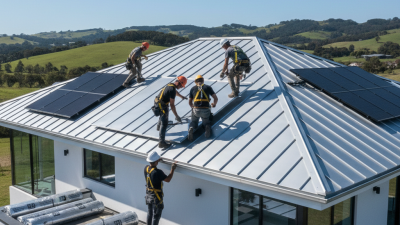
How to Install an Aluminum Roof and Maximize Its Longevity
-
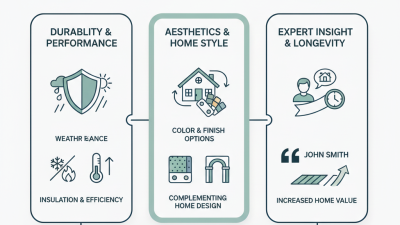
How to Choose the Best Aluminum Roof Panels for Your Home?
-
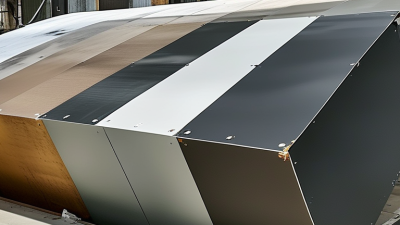
How to Choose the Right Aluminum Panels for Your Project
-
China Top 10 Aluminum Panel Manufacturers for Global Buyers
-
10 Essential Tips for Choosing the Best Roof Panels for Your Home